When To Call A Professional Garage Door Technician
Knowing when to call a professional garage door technician can prevent accidents and costly mistakes. This guide identifies scenarios that require expert intervention and encourages immediate action. Call National Garage Door Services at 469-555-8888 to schedule professional service when you encounter these warning signs. Prompt professional care ensures reliable and safe operation.
Garage doors are heavy, mechanical systems that many homeowners rely on every day. Understanding when to call a professional garage door technician helps you avoid injury, property damage, and wasted time. In this guide you'll find clear indicators of trouble, what you can safely check yourself, and which symptoms require immediate professional attention. If you ever feel unsure, contacting National Garage Door Services is a smart first step.
This content is written to be practical and direct so you can quickly assess common problems. We'll highlight visible warning signs, electrical and mechanical failures, emergency steps you can take, and how professionals diagnose and fix issues. The goal is to give you confidence to act promptly and safely when your door shows signs of trouble.
Common warning signs that mean it's time to call a pro
Not every squeak or slow cycle means an emergency, but some symptoms should not be ignored. Look for sudden changes in how the door moves, strange noises that didn't exist before, and any visible damage to torsion springs, cables, or rollers. These components carry significant tension and power; when they fail, the result can be dangerous. If you see or hear these signs, it's time to call a professional garage door technician.
Below are specific warning signs to watch for. If one or more apply, schedule a professional inspection rather than attempting complex DIY repairs:
- Door moves unevenly or is visibly off its tracks.
- Unusual loud bangs, snaps, grinding, or metal-on-metal noises.
- Door reverses unexpectedly or won't stay closed despite remote commands.
- Slow or jerky movement, or the opener struggles to lift the door.
- Visible damage to springs or cables, including frayed or broken cables.
- Motor smells of burning or the opener emits smoke.
- Remote controls stop working, or wall switch behaves inconsistently.
Why some garage door problems are not DIY projects
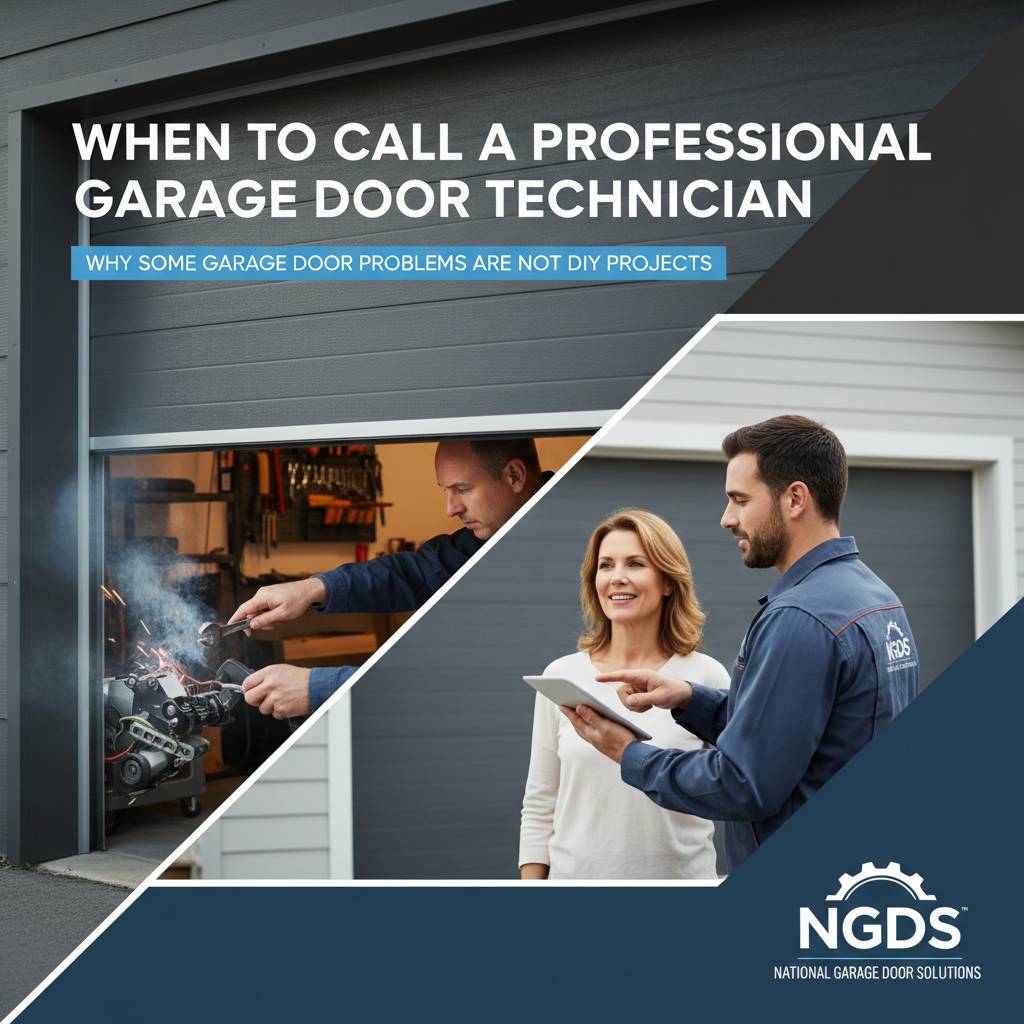 It's tempting to save money by tackling repairs yourself, but many garage door components are under extreme tension and can cause serious injury. Torsion springs store a large amount of energy; when they break or are adjusted improperly, they can snap violently. Similarly, cables and counterbalance systems can cut or pinch. Professionals have the tools and training to control that energy safely and to diagnose underlying issues that may not be obvious.
Electrical issues may appear simple - a replaced remote or a swapped wire - but they can mask intermittent faults, control board failures, or wiring problems that create hazards. Professionals use diagnostic techniques to isolate the true cause and ensure repairs comply with safety standards, preventing repeated failures that could lead to accidents or additional costs.
Tensioned springs and cables: a closer look
Torsion springs and extension springs are designed to counterbalance the door's weight. Adjusting or replacing them requires specific tools and methods to manage stored energy. If a spring is stretched, rusted, or broken, the door may slam shut or fail to open. Professionals not only install correct replacements, but they also set the precise tension for balanced, reliable operation. Attempting to tweak these parts without expertise is one of the most common causes of severe DIY injuries.
Mechanical versus electrical problems - how to tell the difference
Determining whether an issue is mechanical or electrical will help you decide whether to call a professional and what to expect when they arrive. Mechanical problems usually involve hardware - springs, rollers, tracks, hinges, and cables - and often produce physical signs like deformation, wobbling, or visible damage. Electrical problems usually present as inconsistent opener operation, dead remotes, or failure to respond to controls despite the door moving freely when disengaged.
When in doubt, follow a simple test: disconnect the opener by pulling the emergency release and try to move the door manually. If it moves smoothly and balances well, the problem likely involves the opener or electrical controls; if it's heavy, jerky, or sticks, mechanical components are probably at fault. Either outcome is a scenario where calling a garage door technician is appropriate, since diagnosing root causes and ensuring safe repairs often require professional tools and experience.
| Symptom | Likely Category | Urgency |
|---|---|---|
| Door won't move but opener runs | Mechanical (broken gear or disengaged trolley) | High - call a technician |
| Opener doesn't respond to remote or wall switch | Electrical or control system | Medium - diagnostic visit advised |
| Loud bang and door drops suddenly | Broken spring or cable | Emergency - call immediately |
Emergency scenarios and immediate safety steps
Some situations require immediate action to protect people and property. If you hear a loud snap, see a broken spring, notice the door slamming or dropping, or detect smoke or burning smells from the opener, consider these steps while you contact a professional garage door technician. Your primary goals are to keep people away from the door, avoid additional damage, and preserve evidence for the technician to make an accurate assessment.
Take these immediate precautions: step back and keep everyone clear of the door's path; disconnect the opener only if it's safe to do so; don't attempt to lift a heavy door manually; and cut power to the opener if you smell burning or see smoke. After securing the area, call National Garage Door Services for emergency service - professionals can secure the door, make temporary repairs if needed, and schedule a safe, permanent fix.
Here's a quick actionable checklist you can follow in emergencies:
- Step away from the door and keep others clear.
- Don't try to manually lift a jammed or unbalanced door.
- Turn off the opener power if there are electrical smells or sparks.
- Document visible damage with photos for your technician and insurance.
- Contact an experienced technician for safe repair - avoid DIY fixes.
What to expect during a professional service call
 When you call a reputable garage door company, a technician will typically begin with a visual inspection and a set of diagnostics. They'll check balance and alignment, inspect springs, cables, rollers, hinges, tracks, and the opener's drive and electronics. Good technicians explain findings clearly, provide repair options, and estimate costs and timelines before starting any work. This transparency helps you make informed decisions and prevents surprise charges.
A professional service call often includes tightening or replacing worn parts, lubrication of moving elements, and safety testing. Technicians will test auto-reverse sensors, limit settings on openers, and overall balance. If parts are needed, many technicians carry common components to complete most jobs on the first visit. You can expect clear communication about warranties on parts and labor, as well as preventive steps you can take to reduce future service calls.
Below is a typical service checklist your technician might follow. This helps ensure nothing is overlooked and that you receive a complete assessment:
- Visual inspection of springs, cables, tracks, and rollers
- Balance test and manual operation check
- Opener diagnostic and electrical inspection
- Testing of reversing sensors and safety features
- Lubrication and adjustment of moving parts
- Clear estimate and repair plan with warranty details
Choosing the right technician and reducing future calls
Finding a trustworthy technician begins with licensing, insurance, and good customer feedback. Ask for references, proof of insurance, and details about the technician's experience with your brand or type of opener. A reputable company will provide a clear estimate, explain the repair process, and offer options rather than pressuring for unnecessary replacements. If you're ever unsure, request a second opinion or ask for a written diagnosis before authorizing major repairs.
Routine maintenance reduces emergency calls and boosts longevity. Schedule a professional tune-up annually or whenever you notice increased noise or sluggish performance. Regular maintenance includes checking tension, replacing worn rollers or cables, cleaning and lubricating moving parts, and verifying safety features work correctly. These relatively low-cost visits can prevent the need for costly emergency repairs down the road.
Practical homeowner tips to minimize repair frequency include keeping the tracks clear of debris, avoiding slamming the door, and using remotes and controls properly. If you notice incremental changes - slight off-tracking, small noises, or slower operation - arrange a service call before the issue escalates. Preventive care is often the most cost-effective approach.
Frequently asked questions
How quickly should I call a technician after noticing an issue? If the door behaves unpredictably, makes loud sudden noises, or shows visible damage, call as soon as possible. For minor issues like small vestibular noises or a slightly slow opener, schedule a non-emergency inspection within a week to prevent escalation.
Can I replace springs or cables myself? It's not recommended. Springs and cables hold significant energy and require special tools and techniques to replace safely. Attempting DIY replacement is a common cause of severe injuries and property damage. A professional garage door technician has the training and equipment to perform these repairs safely and correctly.
Will a technician give a warranty? Most reputable companies offer warranties on parts and labor. Ask for written warranty details before work begins and keep documentation for future reference. Warranties vary by company and the type of parts used, so make sure you understand the coverage offered by National Garage Door Services or any provider you select.
Real-world example: a quick case study
Consider a homeowner who noticed the garage door began to sag on one side and make a grinding noise when opening. They delayed action for a few weeks until the door finally stopped moving. When a technician from National Garage Door Services arrived, they found a worn spring and a misaligned track that had caused excess stress on the opener. Because the homeowner waited, the opener's drive gear was damaged as well, increasing repair costs. Early inspection would have prevented the escalation.
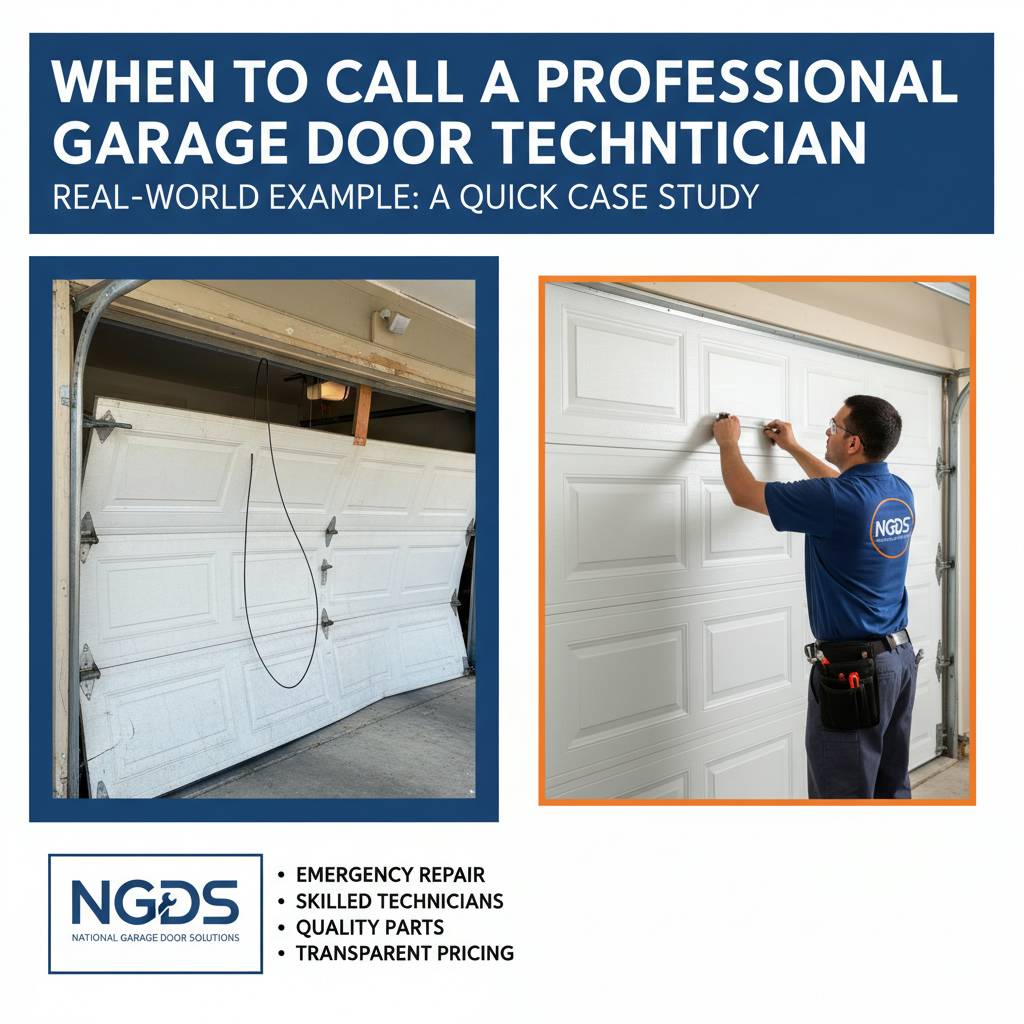
This case underscores a practical rule: early intervention saves money and reduces risk. A small, inexpensive adjustment or replacement is almost always preferable to waiting until multiple components fail and emergency service becomes necessary. Regular checks and prompt service calls are the most effective way to keep your door operating safely.
Final recommendations and next steps
Knowing when to call a professional garage door technician comes down to recognizing serious symptoms, understanding the risks of DIY repairs, and acting promptly. If you hear snapping sounds, see broken or frayed cables, experience sudden drops, or detect electrical smoke, treat the situation as urgent. For slower-developing problems like increasing noise, minor misalignment, or intermittent remote failures, arrange a professional inspection before things worsen.
If you'd like a professional evaluation, contact National Garage Door Services to set up a service visit. A trained technician will perform a thorough inspection, explain findings in plain language, and provide safe, reliable repairs. Whether it's an emergency or preventive maintenance, prompt professional care ensures long-term safety and dependable operation.
Call National Garage Door Services at 469-555-8888 to schedule service or request emergency assistance. Our team is prepared to assess your situation, provide clear options, and complete repairs with safety and quality in mind.
Don't wait until a small issue becomes a major hazard - reach out to National Garage Door Services at 469-555-8888 today.