Cost Of Delaying Garage Door Repairs
Delaying garage door repairs: an introduction
Garage doors are more than curb appeal; they are a working system that protects vehicles, storage, and sometimes even a home's primary living space. When homeowners postpone maintenance or ignore small noises, the consequences extend beyond inconvenience. If you want reliable estimates and timely inspections, contact National Garage Door Services at 469-555-8888 to schedule a professional assessment before a minor issue becomes a major expense.
This article explains the cost of delaying garage door repairs from practical, financial, and safety perspectives. It is written to help homeowners make informed decisions, weighing immediate repair costs against the potential for larger, avoidable expenditures. Read on to understand typical warning signs, realistic cost comparisons, and the steps that can preserve both safety and value.
Why small issues become major expenses
Garage door systems are composed of interconnected parts-springs, cables, rollers, tracks, hinges, and the opener. A single worn roller or slightly misaligned track changes force distribution across the system. When one element fails, additional components work harder and wear faster. Delaying a repair that could have been a simple parts replacement can therefore escalate into a full-panel replacement or a costly torsion spring and track rebuild.
Beyond mechanical domino effects, time exacerbates damage through rust, weather exposure, and fluctuating temperatures. A minor gap or loose fastener left unattended can let moisture in, corrode hardware, or warp wooden doors. In many cases the initial repair fee is small compared to the compounded cost of replacement, refinishing, and labor once corrosion or structural failure sets in.
Common warning signs you should not ignore
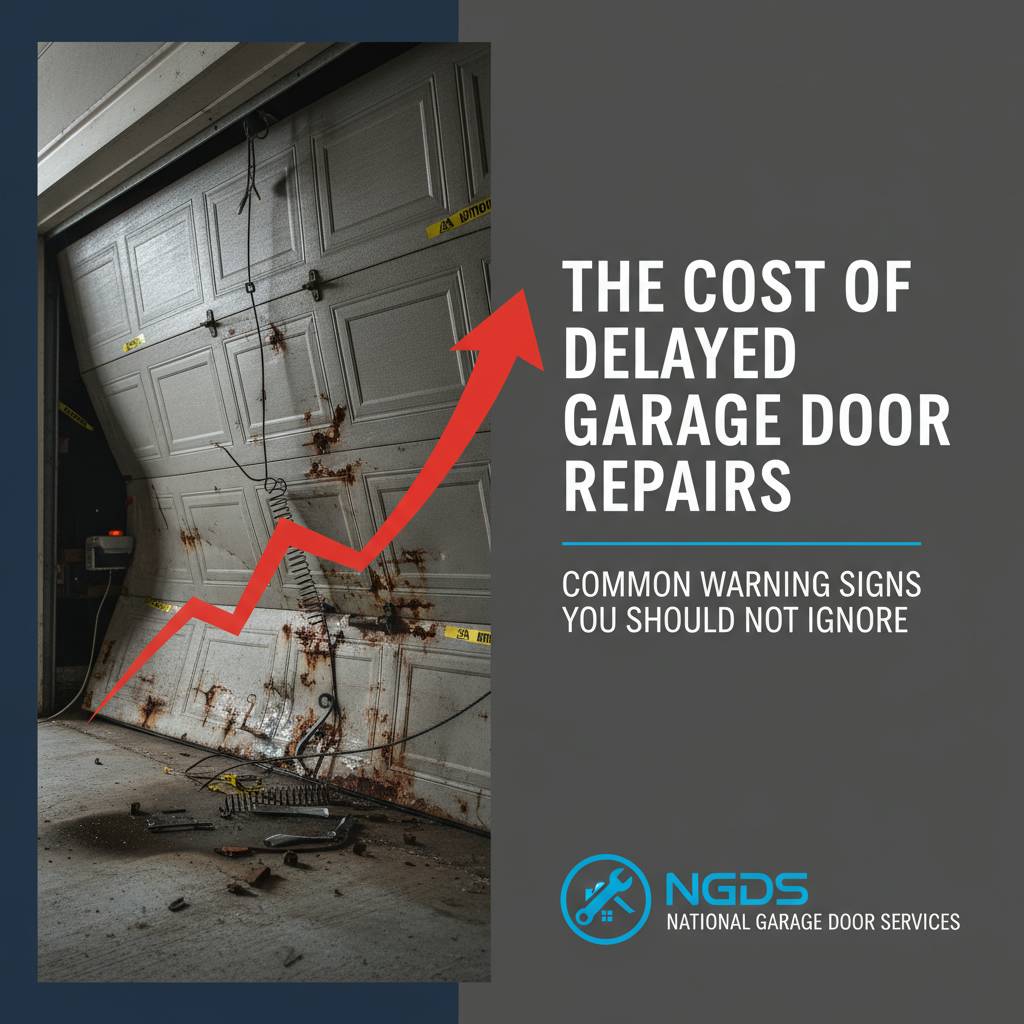 Recognizing early warning signs is the most effective way to avoid escalated costs. Common indicators frequently dismissed as nuisances are often the first stage of a cascading problem. The following list highlights the symptoms that warrant immediate inspection to avoid higher long-term expense and safety risk.
- Loud grinding, screeching, or screeching metal sounds during operation
- Door imbalance-one side appears lower than the other or the door drifts after closing
- Slower than normal opening or closing, or the opener struggles to operate
- Visible gaps between door panels or warped sections exposing seams
- Frayed or slack cables, loosened nuts and bolts, or rusted track sections
- Vibrations, shaking, or an increase in the frequency of small failures
Any of these signs suggest an inspection and often a relatively low-cost repair such as lubrication, tightening, or part replacement. Ignoring them increases the probability of sudden failure, which can be disruptive and expensive.
Financial impact: realistic costs and comparisons
Understanding the economics is essential when assessing whether to repair now or defer. Typical minor repairs-replacing rollers, lubricating tracks, or tightening hardware-often range from under a hundred dollars to a few hundred including labor. By contrast, major repairs or replacements such as new torsion springs, extensive track realignment, or full door panel replacement quickly run into several hundred to thousands of dollars.
| Issue | Typical immediate repair cost | Potential cost if delayed |
|---|---|---|
| Roller replacement and lubrication | $75$200 | $300$600 (track damage, opener stress) |
| Torsion spring replacement | $150$350 | $400$900 (additional cable/track work) |
| Opener motor repair | $100$300 | $500$1,200 (full opener replacement) |
| Panel replacement or full door | $200$800 (single panel) | $800$3,000 (full door replacement, paint/refinish) |
These ranges are approximate, varying by region, door size and material, and whether specialized labor (for torsion springs, for example) is required. Nevertheless, the pattern is clear: proactive repairs are almost always more economical than reactive replacements. When you factor in ancillary expenses-structural damage, property damage from a failed door, or lost use-the financial case for early intervention strengthens.
Hidden costs beyond direct repairs
Direct repair bills are only part of the picture. Indirect or hidden costs often tip the scales even more heavily in favor of addressing problems early. Time lost arranging services, vehicle damage from a failed door, wasted energy from poor insulation, and potential theft exposure all carry financial consequences that homeowners frequently underestimate when deferring maintenance.
Insurance implications can also increase the long-term cost of delay. Repeated neglect may lead insurers to deny claims or raise premiums if a failure is linked to lack of maintenance. Additionally, an accident caused by a neglected door-such as a collapsing panel or a malfunctioning opener causing injury-can lead to liability claims and higher out-of-pocket expenses than simple repair work.
Safety and liability: why delay can be dangerous
 Garage doors are heavy and operate under high tension. Parts like torsion springs and cables store significant energy and can cause serious injury if they fail. Leaving these components in a compromised state increases the risk of sudden, hazardous failure. A spring snapping or cable unravelling can cause the door to fall unexpectedly or become uncontrollable during operation.
Beyond personal injury, a malfunctioning garage door can create home security vulnerabilities. A door that does not lock properly, leaves gaps, or cannot close completely gives opportunistic thieves easier access. For families with children or pets, the stakes are even higher; a door that drops or closes unexpectedly is a clear safety hazard that requires immediate attention rather than deferred action.
How prompt maintenance and early repairs save money
Routine maintenance and timely minor repairs provide compound savings. Regular inspections identify wear before it becomes structural. Lubrication, tightening fasteners, realigning tracks, and replacing inexpensive rollers are inexpensive preventative measures that preserve component life and reduce strain on the opener and springs. These actions delay the need for major replacements and can double or triple the service life of some parts.
Consider a simple maintenance plan: annual inspection, spring lubrication before winter, and immediate replacement of frayed cables or worn rollers. These low-cost commitments prevent emergency service calls and reduce the probability of sudden failures. When budget planning, account for small recurring maintenance instead of a large, unexpected replacement expense-this approach is often the most financially rational.
- Schedule annual inspections to catch early wear
- Address odd noises immediately-don't wait for a failure
- Replace worn rollers and cables rather than waiting for complete failure
- Keep the door balanced to reduce strain on springs and opener
Practical steps to take when you notice a problem
If you observe suspicious symptoms, take measured, effective steps that balance safety with cost-efficiency. First, stop using the door until you understand the risk-particularly if the door is making loud noises, moving unevenly, or showing visible damage. Second, document the issue for the technician (photos and a brief description help). Third, schedule an inspection with a qualified service provider to get an accurate estimate and a prioritized list of repairs.
When speaking with technicians, ask for written estimates that separate parts and labor and explain the likely consequences of deferral. A reputable technician will outline immediate fixes, recommended maintenance, and the long-term implications of postponing work. Choosing repairs that address root causes-rather than temporary fixes-prevents repeated service calls and larger expenses.
Choosing a reliable service provider
Finding the right contractor makes a measurable difference in costs over time. Look for licensed, insured technicians with transparent pricing, clear warranties, and documented experience with your door type. Read reviews and ask for references. High-quality service providers will explain alternatives and prioritize safety, giving you the information needed to avoid unnecessary or premature replacements.
Our team at NGDS works within these standards, focusing on durable solutions that protect your investment. Whether you need a quick inspection, a targeted repair, or a comprehensive maintenance plan, an experienced provider will help you understand the trade-offs and the real costs of delaying repairs.
Real-world examples and case studies
Example 1: A homeowner ignored persistent grinding noises for six months. What began as a $120 roller replacement turned into a $1,200 repair once the track warped and the opener motor was damaged. Had the initial inspection occurred, simple lubrication and roller replacement would have been sufficient. This illustrates how small, ignored symptoms can multiply costs within months.
Example 2: Another household proactively replaced a frayed cable discovered during a seasonal check. The cable replacement cost was under $200, preserving the torsion springs and avoiding an emergency service call. The owner avoided vehicle damage and kept insurance records up to date, preventing potential premium increases.
When replacement is the right choice
There are circumstances where replacement is more economical than repeated repairs: extreme rust across multiple panels, severe structural damage, or a door that no longer meets insulation or security needs. In these cases, an honest assessment from a trusted technician will outline lifecycle costs and energy savings analyses that justify replacement. The key is choosing replacement for the right reasons, not because minor issues were deferred until they became unavoidable.
Compare lifetime costs-materials, labor, energy efficiency, and expected life span-before deciding. Sometimes a newer, well-insulated door reduces heating and cooling costs enough that the investment pays back over time. A knowledgeable provider will help calculate these factors and show the clear distinction between premature replacement and necessary renewal.
Call to action
 If you are seeing any of the warning signs discussed here, don't wait; the cost of delaying garage door repairs can accumulate quickly and create safety hazards for your household. Schedule a professional inspection with National Garage Door Services today to get an honest, written estimate and a prioritized repair plan.
For reliable estimates and to protect your investment, contact National Garage Door Services at 469-555-8888. Early intervention often saves money compared to major replacements-and it keeps your home and family safer.
Closing
Making a smart, timely decision about garage door maintenance preserves value, reduces risk, and minimizes long-term expense. Whether you need a quick repair, routine maintenance, or a full evaluation to determine the best path forward, National Garage Door Services can provide the expertise and transparent pricing you deserve. Reach out today and let professionals assess the true condition of your system before small problems become large ones.
Contact National Garage Door Services at 469-555-8888 to schedule a timely inspection and secure peace of mind for your home and investment.