How To Tell If Garage Door Needs Repair
Many homeowners wonder how to tell if a garage door needs repair. This article walks readers through clear diagnostic steps and encourages prompt evaluation. If you spot concerning symptoms call National Garage Door Services at 469-555-8888 for a professional assessment. Our goal is to help you decide when to seek expert help.
Why noticing early signs matters
Garage doors are heavy, complex systems that combine springs, cables, rollers, tracks, motors and safety sensors. Because of that complexity, small problems can rapidly become safety hazards or expensive repairs. Understanding how to tell if garage door needs repair helps you prioritize safety for your family, avoid damage to vehicles and property, and extend the life of the system. Early detection often saves both time and money.
Many homeowners shrug off minor noises or slight misalignment, assuming it'll be fine. In reality, those gentle warnings are often precursors to broken springs, snapped cables, or motor burnout. A timely evaluation by a qualified technician can prevent a full failure and the risk of an unexpectedly falling door. If you're unsure what you're seeing or hearing, a quick diagnostic check at home can clarify whether it's time to call for professional help.
Common warning signs to watch for
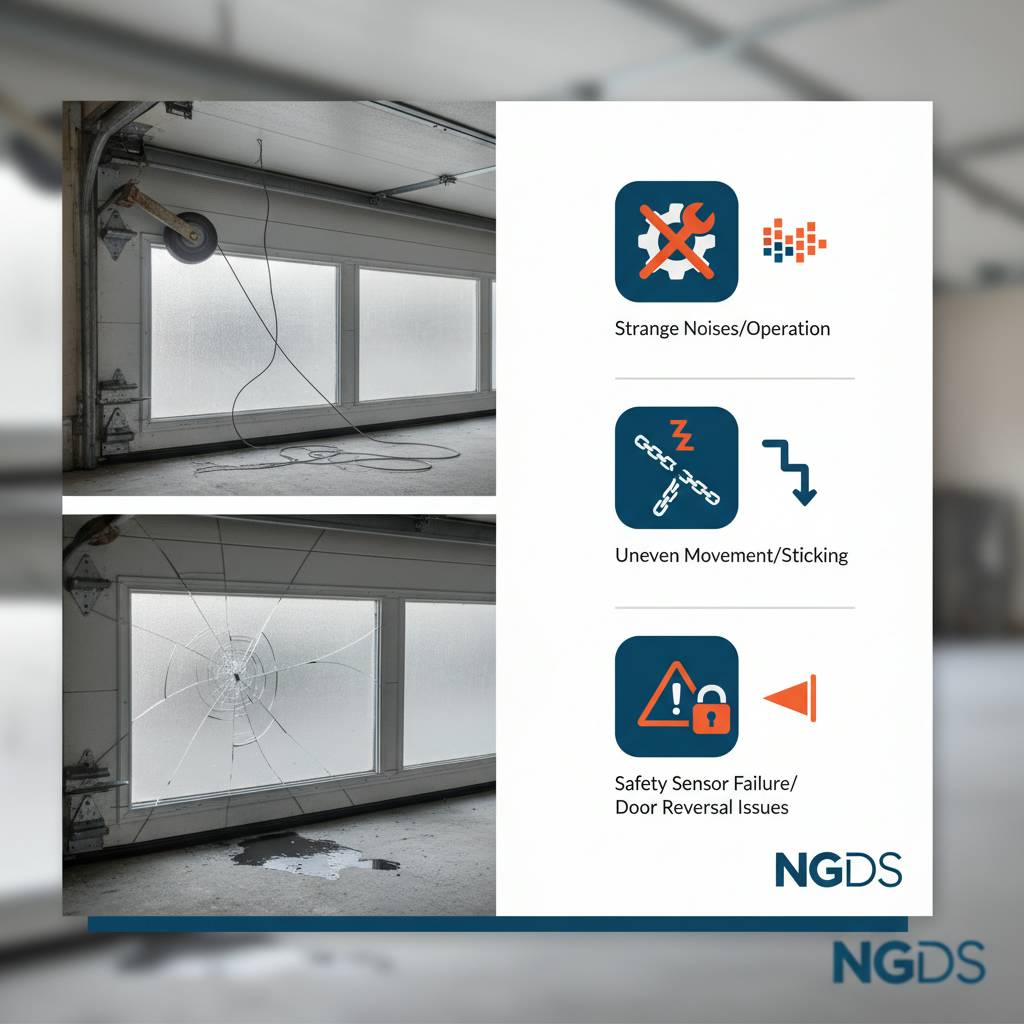 There are clear, repeatable symptoms that indicate a garage door probably needs repair. Recognizing these signs can help you decide whether to perform a safe, basic check yourself or contact a pro right away. Keep an eye out for irregular movement, unusual sounds, and visible wear on parts that are easy to inspect without tools.
- Grinding, scraping, or loud squealing when the door opens or closes
- Door moves unevenly, lags, or tilts to one side during travel
- Remote or wall switch doesn't always respond or works intermittently
- Door won't fully close, reverses, or triggers the safety sensors
- Visible fraying or break in cables, or a broken torsion spring
- Door takes longer than normal to open or close, or the motor sounds strained
Any of these are concrete clues that something is wrong. For example, a door that suddenly starts slamming instead of closing smoothly likely has a broken spring or misaligned track, both of which require professional attention to correct safely.
Simple, safe diagnostics you can do at home
Before you pick up the phone, you can perform a few basic checks that are safe for most homeowners. These simple observations will give you better information when you speak to a technician, and some minor problems can be corrected with maintenance rather than full repair. Always disconnect automatic openers and keep fingers and clothing away from moving parts when testing.
Begin by visually inspecting accessible components: look for loose bolts on hinges, misaligned tracks, and worn rollers. Listen to the door as it moves-note whether noise occurs at start, during travel, or at the end of the cycle. Test the balance by disconnecting the opener (use the release handle) and manually lifting the door halfway; a properly balanced door should stay put. If it falls or rises on its own, that is a sign the springs need attention.
Step-by-step quick checks
- Test the door balance as described-never attempt to adjust springs yourself.
- Operate the door and observe the opener: does the motor struggle or make grinding sounds?
- Inspect safety sensors (mounted near floor): make sure they're aligned and free of debris.
- Check weatherstripping and bottom seal for tears-these aren't emergencies but affect performance.
When noises indicate a problem
Sound is one of the most reliable early indicators of mechanical trouble. A soft hum from the opener is normal, but loud bangs, clanging, or grinding generally point to specific issues. For example, a high-pitched squeal often indicates dry or failing rollers and hinges, while a heavy thud can mean the door is striking the track because of misalignment or worn rollers.
If you hear a sudden loud bang and the door won't open, that could indicate a torsion spring has snapped. Torsion springs are under extreme tension and can be dangerous; do not attempt to fix them yourself. Instead, secure the area and call a professional right away. Similarly, if the motor runs but the door barely moves, check for broken cables or disconnected components and contact National Garage Door Services.
Understanding mechanical failures vs. electrical issues
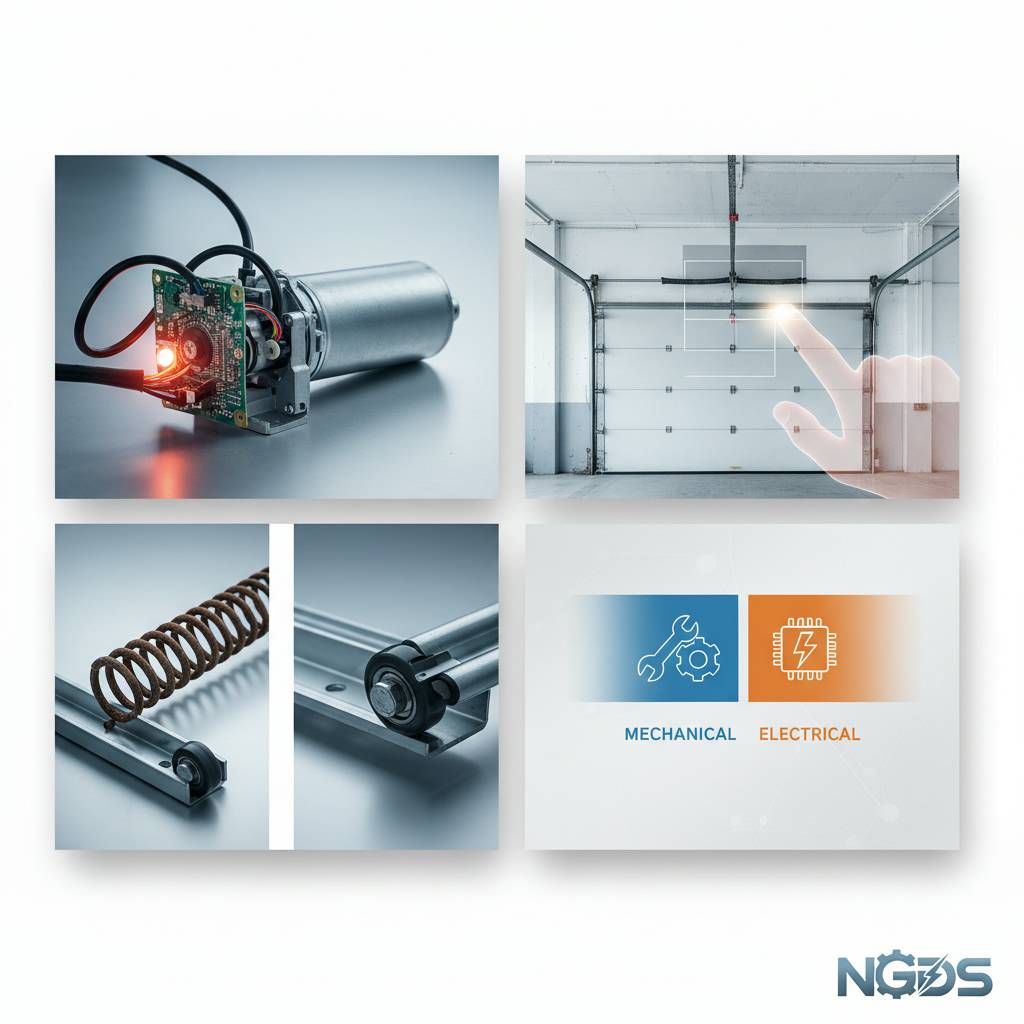 Not all garage door problems are mechanical-some originate in electrical components such as the opener, remote, wall switch, or sensors. If the door responds inconsistently to remotes, the issue may be as simple as dead batteries or a faulty remote, but intermittent behavior often signals opener logic board problems, motor wear, or poor electrical connections.
Mechanical problems typically present physically: broken springs, frayed cables, bent tracks, or worn rollers. Electrical issues may show up as unresponsive controls, erratic operation, or safety sensors that won't clear. When diagnosing how to tell if garage door needs repair, document whether the symptom appears when operating the door manually, with the wall switch, or only with remote control. This helps technicians identify the source more quickly.
Common repairs and typical urgency
Some repairs are urgent because they affect safety, while others are more about convenience and longevity. Broken torsion springs and snapped cables are high urgency-these parts keep the door counterbalanced and safe to operate. Bent tracks that cause the door to jam or fall off rollers are also urgent. On the other hand, worn weatherstripping, loose screws, or noisy rollers may be addressed on a routine maintenance visit.
| Problem | Likely cause | Urgency |
|---|---|---|
| Door won't open or suddenly falls | Broken spring or cable | High - call a pro immediately |
| Loud grinding from opener | Worn gears or motor strain | Medium - schedule repair soon |
| Door reverses before closing | Misaligned sensors or track obstruction | Medium - troubleshoot sensors, call if unresolved |
| Slow operation | Motor issue, spring tension, or heavy door | Medium - inspect and repair to prevent escalation |
Use this quick reference to set expectations for how promptly you should act. When in doubt - especially with springs, cables, and anything involving sudden door movement - contact a trained technician rather than attempting a DIY fix.
DIY fixes you can safely attempt
There are a few homeowner-friendly maintenance tasks that can improve performance and delay bigger repairs. Lubricating rollers, hinges, and the torsion spring with a manufacturer-recommended lubricant reduces noise and wear. Tightening loose bolts and screws on brackets can eliminate rattles and prevent parts from shifting into misalignment.
Cleaning and aligning the safety sensors is another safe task: wipe lenses clean, ensure they're facing each other squarely, and check for obstructions in their path. Replacing remote batteries and checking that the opener's travel limits are set correctly are also reasonable DIY steps. Avoid adjusting springs, cables, or the opener's internal gears-those are best left to professionals.
What a professional inspection will include
When you call National Garage Door Services for an assessment, the technician will perform a systematic inspection. Expect checks of spring tension and condition, cable integrity, track alignment, roller and hinge wear, opener motor function, and safety sensor performance. They'll also test the door balance under load and evaluate the opener's electrical components and logic board where necessary.
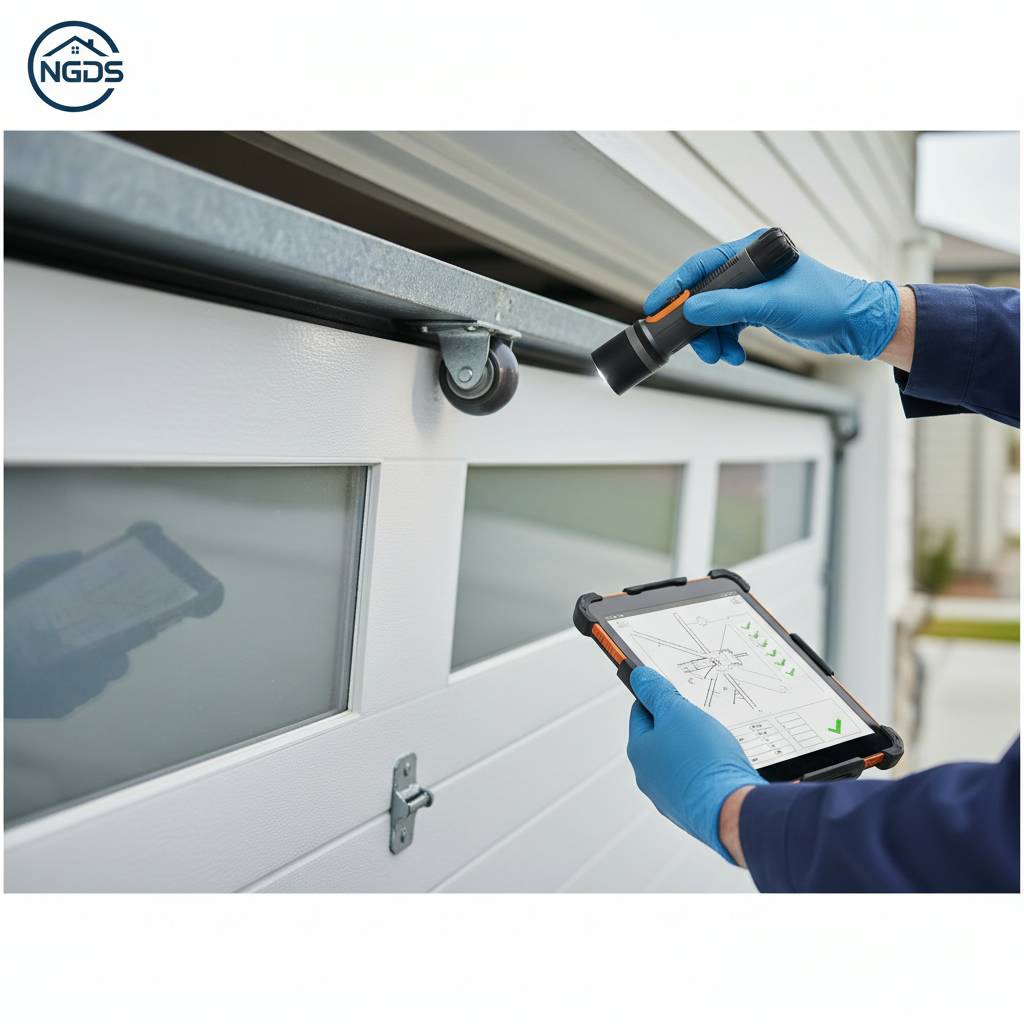
After the inspection, the technician should provide a clear explanation of findings, options for repair or replacement, estimated costs, and timing. A reputable company will prioritize safety, explaining which issues must be fixed immediately and which can be planned into routine maintenance. NGDS may be used informally by some technicians to describe quick service options, but any recommendation should include specifics and transparent pricing.
Frequently asked questions
Is a noisy door always dangerous?
Not always, but noise is a useful diagnostic clue. Squeaks often mean lubrication is needed; grinding or clanking often means worn or broken hardware. If noise accompanies jerky movement or if the door suddenly behaves unpredictably, treat it as potentially dangerous and call a professional.
Can I replace a torsion spring myself?
No. Torsion springs are under extreme tension and can cause serious injury or death if mishandled. Always hire a trained technician to replace springs. Other tasks, like changing remote batteries or lubricating hardware, are safe for most homeowners when done correctly.
How much does a typical repair cost?
Costs vary widely depending on the part and severity-simple adjustments and lubrication are low-cost, while spring or motor replacements run higher. Your technician should give a written estimate before beginning work. If you see signs like snapped springs or frayed cables, expect a higher urgency and cost due to the need for safe, immediate repair.
Closing thoughts and next steps
Knowing how to tell if garage door needs repair empowers you to take appropriate action-whether that's scheduling routine maintenance, performing safe DIY checks, or calling in a professional for urgent issues. Small problems caught early typically mean lower repair costs and reduced safety risks. Keep a mental checklist of the warning signs we reviewed and inspect the door visually every few months.
If you notice worrying symptoms, don't delay. For a careful, professional evaluation call National Garage Door Services at 469-555-8888. Whether it's a noisy opener, a misaligned track, or a suspected broken spring, a prompt inspection will protect your home and family while helping you avoid larger repairs later.
Ready for a professional check? Contact National Garage Door Services to schedule an inspection and get clear recommendations tailored to your door's condition.
For immediate concerns or to arrange service, call 469-555-8888 today-our team is ready to help you determine whether repair or replacement is the best next step.