Warning Signs Of Garage Door Spring Failure Needing Immediate Repair
Garage door spring failure is a critical issue that often requires immediate repair. This article details the warning signs and explains why waiting can be dangerous. We urge homeowners to contact National Garage Door Services at 469-555-8888 for urgent spring replacement when needed. Our technicians are trained to handle high tension springs safely. Acting quickly protects your property and prevents injury.
Recognizing the warning signs of garage door spring failure needing immediate repair
Garage door springs work quietly and under extreme tension until they suddenly do not. The most effective way to avoid an accident is to know the common indicators that a spring is failing. Recognizing early signs lets you call a professional before a minor problem becomes a major hazard. Below are the clear, observable symptoms every homeowner should know.
Some signs are audible or visible, while others appear in how the door moves. A single broken spring usually causes immediate imbalance; two failing springs may still allow limited motion but create unpredictable behavior. If you notice any of the following, treat the situation as urgent and schedule a repair with a trained technician.
Typical audible and visual cues
- Loud, sudden noise: A distinct snap or bang near the top of the door often means a spring has broken. Even if the door still opens, the noise is a red flag.
- Visible gap in the spring: On closer inspection, a coiled spring that shows a clear separation or a loose, unruly coil should be considered failed or imminently failing.
- One-sided door alignment: If the door looks crooked or tilts when opening or closing, springs may be uneven or broken.
Movement and mechanical signs
- Slow or labored operation: The opener may strain, hesitating or struggling to lift what the springs normally assist.
- Door slams shut or drops quickly: A sudden drop is dangerous and indicates the spring is not supporting the door's weight properly.
- Strange vibrations or jerking: Stuttering motion, stalling, or excessive bounce during operation points to spring problems or related hardware stress.
Why waiting to repair a failing spring is dangerous
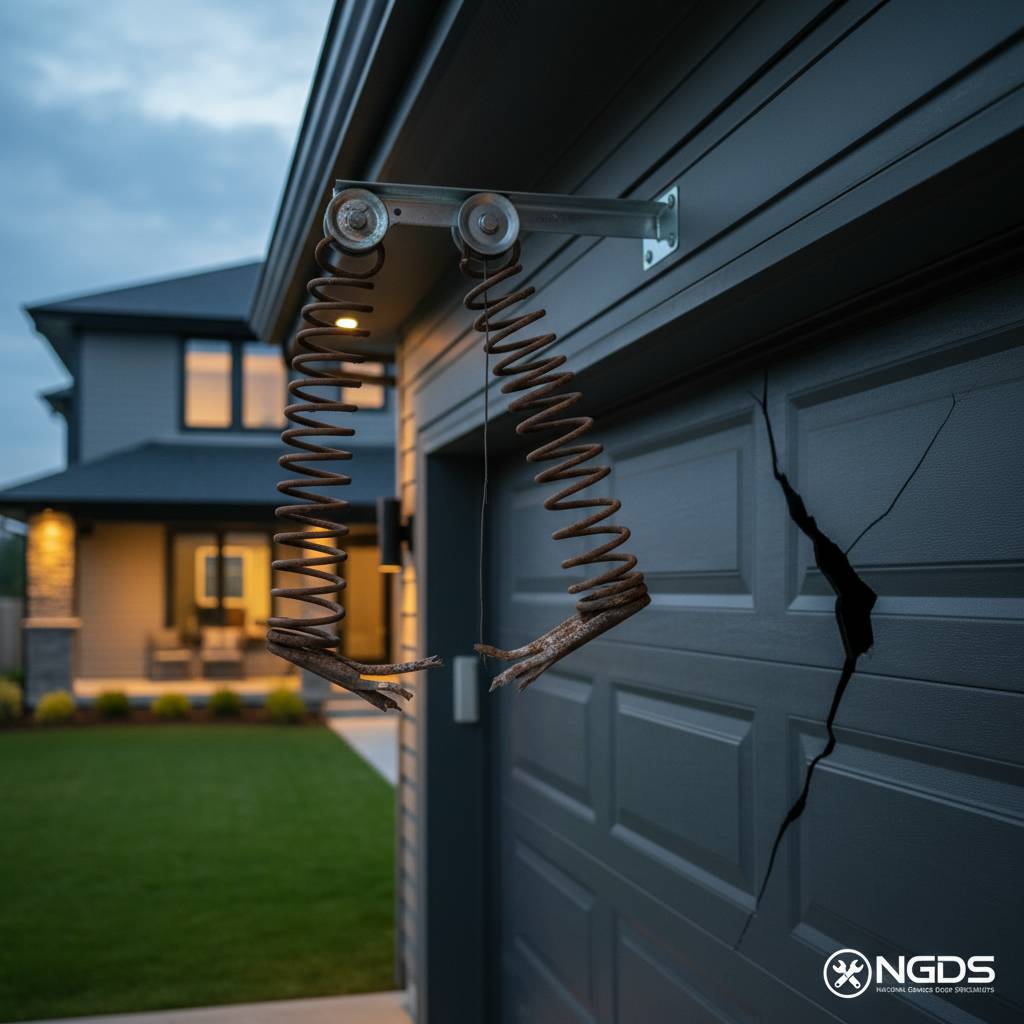 Putting off spring repair is more than an inconvenience; it increases the likelihood of injury and property damage. Garage doors can weigh hundreds of pounds, and springs are the primary counterbalance. Without reliable spring tension, the door can fall uncontrollably, crush vehicles, or trap people and pets. The risk multiplies when a door is used frequently and springs are already compromised.
There is also a cascade effect on other components. When springs are weak or broken, the opener bears excess load and its motor, gears, and tracks can wear out prematurely. What might have been a single, relatively affordable repair can escalate into multiple costly replacements if ignored. Prompt action preserves both safety and budget.
It's worth noting that attempting DIY fixes without proper tools and training is risky. High-tension springs store energy like a compressed coil and can cause serious injury if they release unexpectedly. That's why we recommend contacting trained professionals like National Garage Door Services rather than improvising a repair procedure.
How professional technicians replace high-tension springs safely
Qualified technicians follow strict safety protocols and use purpose-built tools to manage the dangerous energy in garage door springs. A trained crew will first assess the door system, identify which springs are installed (torsion versus extension), measure weight and travel, and select the correct replacement parts. Safety during replacement depends on accurate measurement and the right hardware.
Technicians secure the door, use winding bars and clamps designed for high-tension springs, and adjust tension in controlled increments. They inspect related hardware-cables, rollers, tracks, and the opener-to ensure the entire system is safe and balanced. After installation, they calibrate the opener and perform safety checks so the door operates smoothly and to manufacturer standards.
Comparison: torsion springs vs. extension springs
| Feature | Torsion Springs | Extension Springs |
|---|---|---|
| Location | Mounted above the door on a torsion bar | Mounted along the horizontal tracks |
| Typical lifespan | Higher cycle life; better for heavy doors | Shorter cycle life; common on older or lighter doors |
| Safety considerations | Requires precise winding; professional tools essential | Cables and containment systems often used; still hazardous |
| Balance and performance | Provides more even balance and smoother operation | Can create uneven tension if one spring fails |
Immediate steps to take if you suspect a failing spring
Safety first: if you suspect a spring is failing or has broken, stop using the door immediately. Continuing to operate the opener or manually forcing the door can cause unpredictable and dangerous movement. Secure the area by keeping children and pets away and moving vehicles clear of the door path. Once the scene is safe, contact a trained service provider.
Before the technician arrives, there are a few careful, non-hazardous checks you can do. Visually inspect the spring without touching it, looking for obvious breaks, gaps, or loose winding. Note any odd noises, the direction of tilt, and whether the door opens partially or not at all. These observations help the technician prepare the right parts and tools.
What not to do
- Do not attempt to cut, clamp, or clamp the spring yourself.
- Do not use improvised tools to wind or unwind springs.
- Avoid opening the door manually unless you are sure it is properly supported and you understand the risks.
- Do not delay calling for professional service after observing any critical warning signs.
Preventive maintenance to reduce the risk of sudden spring failure
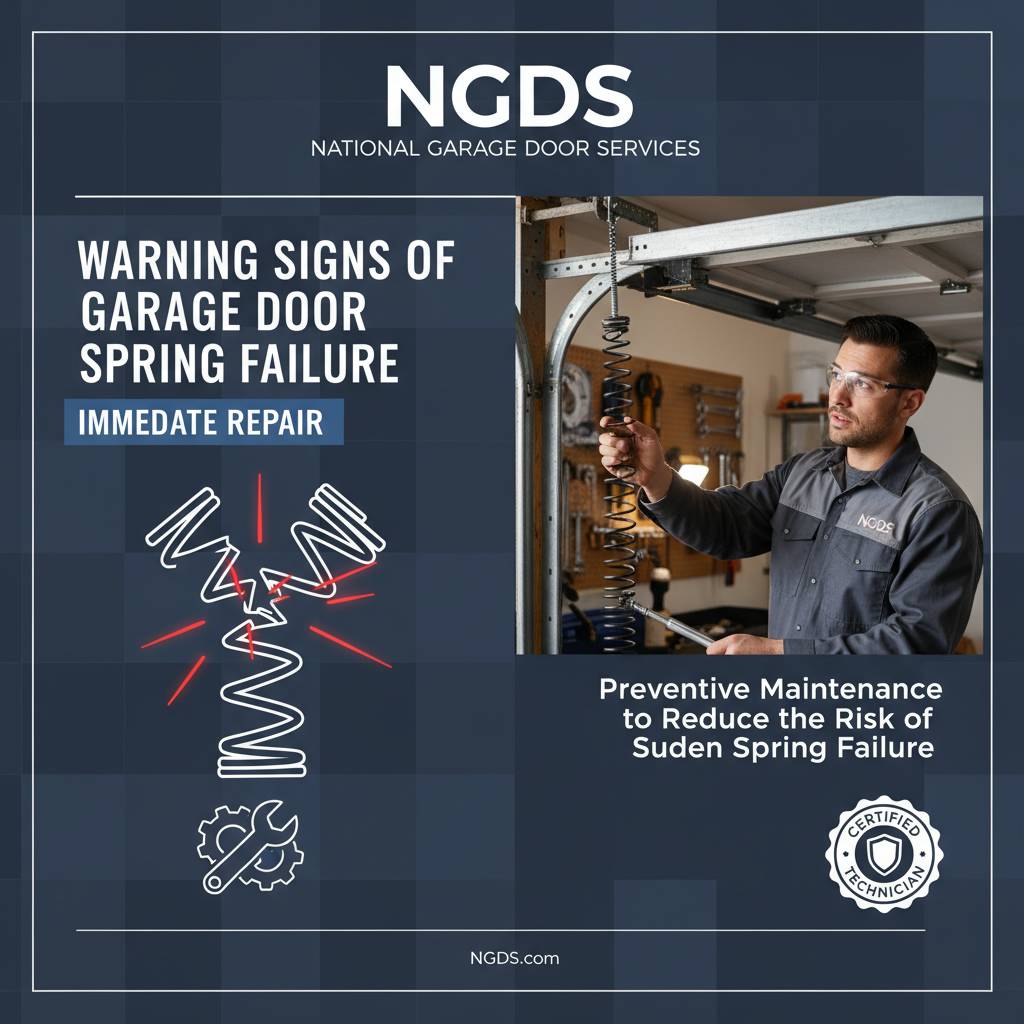 Regular maintenance is the best strategy for preventing sudden failures and prolonging spring life. A basic schedule includes a visual inspection every three months and a professional tune-up annually or biannually depending on usage. Simple maintenance tasks, performed safely, can reveal wear long before springs break and allow planned replacement rather than emergency repair.
Lubricating moving parts, keeping tracks clean and aligned, and checking cables and pulleys for fray or wear are practical tasks homeowners can perform without touching springs. Balance tests-performed by disconnecting the opener and raising the door halfway-are useful diagnostics but should be done with caution. If the door does not stay in place or moves unpredictably, call a professional.
Maintenance checklist
- Inspect springs and hardware for rust, gaps, and corrosion.
- Lubricate rollers, hinges, and bearings with a recommended product.
- Test door balance and automatic reverse functions periodically.
- Replace worn parts promptly; don't wait for a spring to fail.
Real-world examples and outcomes
Consider a homeowner who heard a snap late at night and assumed the door would still operate in the morning. The next day the door dropped as the car was being driven out, causing damage to the vehicle and injuring a passenger. Contrast that with another homeowner who noticed increasing noise and called National Garage Door Services immediately; a same-day technician made a controlled replacement and prevented injury and costly damage. The difference between proactive service and delayed repair is often dramatic.
Another common scenario involves older single springs on heavier doors. When that spring breaks, the opener tries to compensate and burns out, leaving homeowners with both a broken spring and a dead opener. Timely replacement of worn springs can avoid this compounded expense.
Frequently asked questions
How fast should I call a technician after seeing warning signs?
As soon as you notice warning signs of garage door spring failure needing immediate repair, contact a professional. In many cases the next use of the door increases the chance of a sudden failure. If the door controls a primary vehicle or secures valuable property, request emergency or same-day service to reduce risk.
Can I replace just one spring if the other looks fine?
Technicians often recommend replacing springs in matched pairs. Even if one spring appears operational, the springs age together and may have similar cycle counts. Replacing both ensures balanced tension and reduces the likelihood of near-term failure of the remaining spring.
Is it safe to use the garage door opener with a broken spring?
No. Using the opener with a broken or weak spring can cause the motor and drive components to overwork, leading to further damage and potentially dangerous door movement. Secure the door and schedule professional repair before using it again.
How much does emergency spring replacement typically cost?
Costs vary by region, spring type, door weight, and whether same-day service is required. Professional evaluation gives the best estimate. Remember that the expense of prompt replacement is often lower than the combined costs of damaged property, a destroyed opener, or medical bills from an injury.
Contact National Garage Door Services for urgent spring replacement and expert service
If you're seeing any of the warning signs of garage door spring failure needing immediate repair, don't wait. National Garage Door Services offers rapid response and experienced technicians who specialize in safe, professional spring replacement. Our team will assess the situation, explain your options, and complete repairs using the correct parts and methods to restore safe, reliable operation.
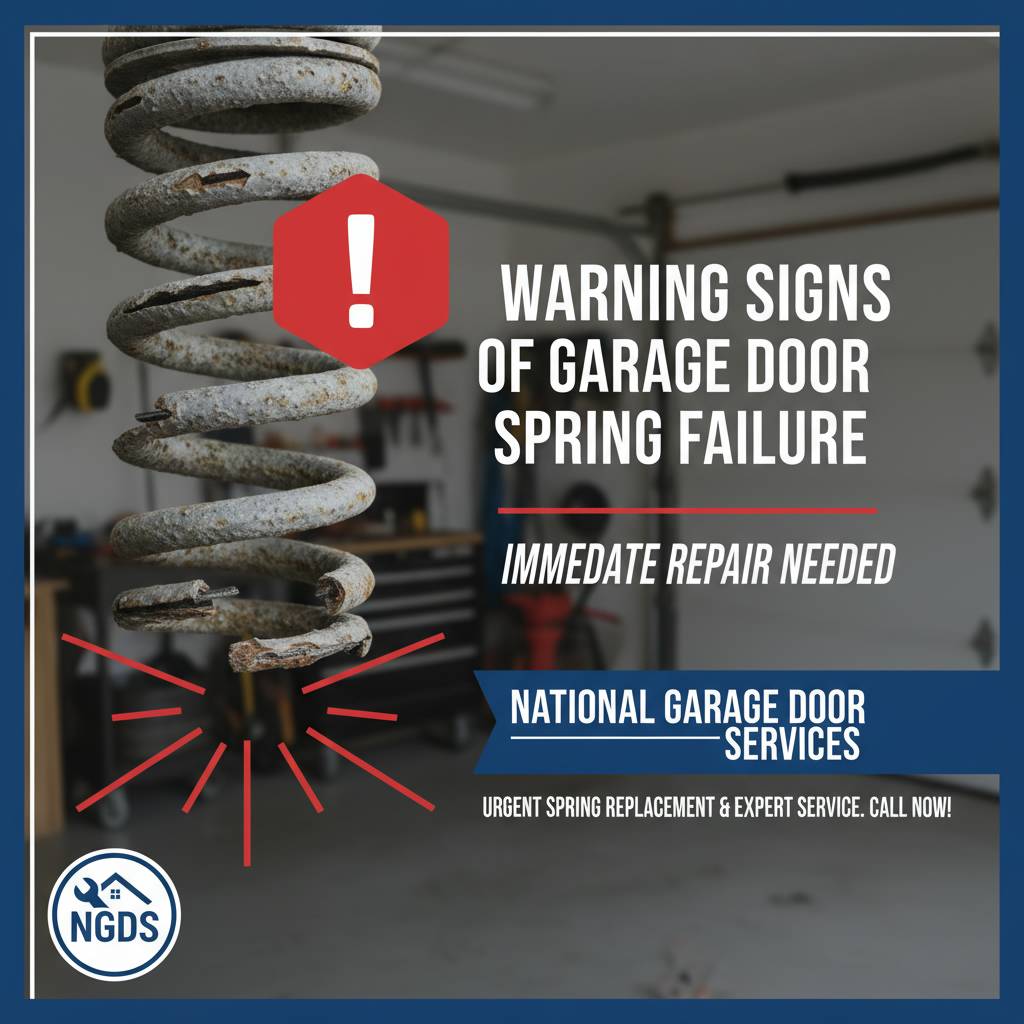
For prompt, trusted service, call us today at 469-555-8888. Whether it's an emergency break or preventative replacement, National Garage Door Services is ready to help. Our technicians bring the training and tools required to handle high-tension springs safely, and we stand behind our work so you can feel confident your garage door is secure.
If you have questions or prefer to schedule a diagnostic visit at a convenient time, reach out to National Garage Door Services now. Acting quickly protects your home and family, and ensures a controlled, professional repair rather than an emergency response later. Call 469-555-8888 to arrange service.