How Frayed Garage Door Cables Indicate Urgent Professional Repair
Frayed garage door cables: a clear signal you need professional help
When a garage door cable shows visible wear or begins to fray, it isn't a minor cosmetic issue - it's a mechanical problem that can quickly become dangerous. Many homeowners first notice a few loose strands or a slight wobble when the door operates. That moment should prompt immediate attention because cables are critical to the system that balances and controls the door's heavy panels.
National Garage Door Services understands the urgency of these situations. If you suspect cable damage, call now at 469-555-8888 to schedule a safe inspection and replacement. Prompt professional assessment prevents sudden failures and reduces the risk of injury or property damage. Avoid delaying action or attempting complex repairs without the right tools and training.
How to recognize frayed cables and early warning signs
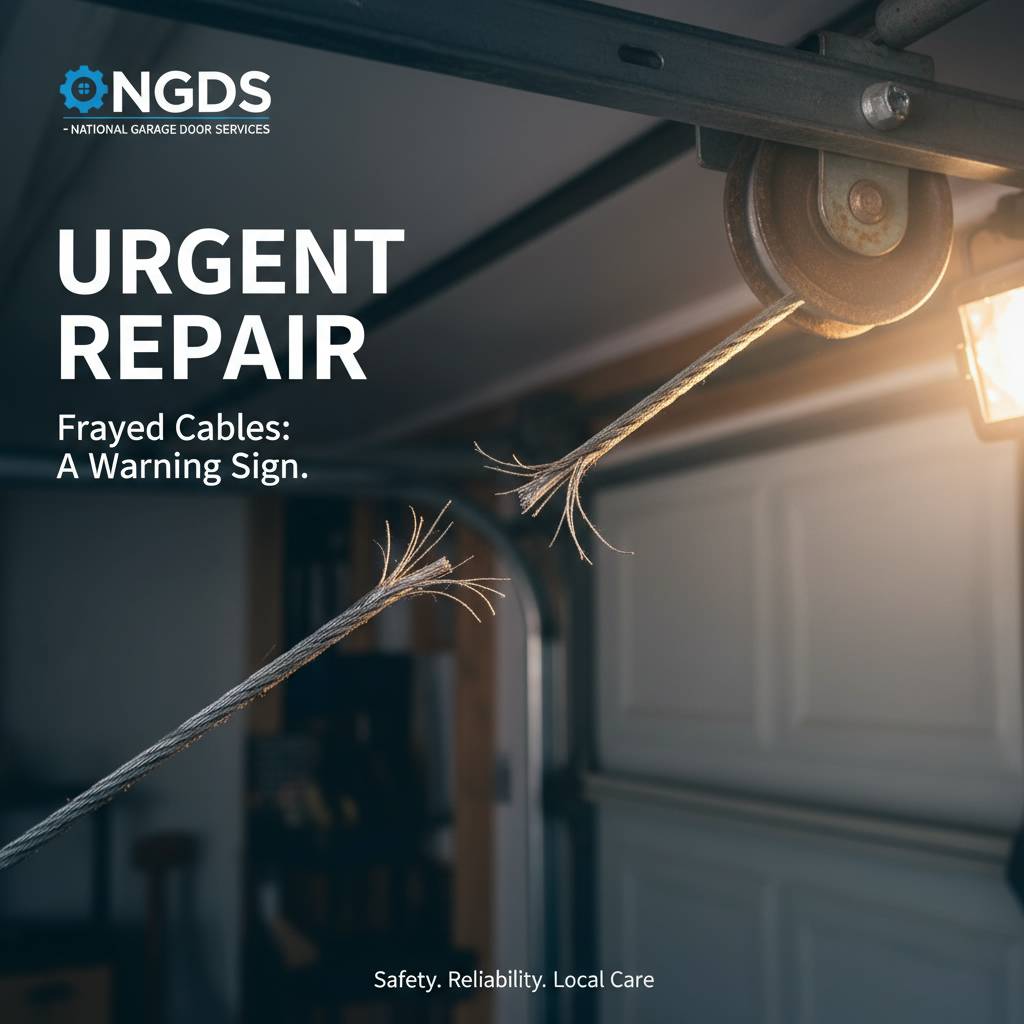
Knowing what to look for can keep a small problem from turning into an emergency. Fraying commonly appears as loose wire ends near the drum or winding area, or as uneven thickness along the cable length where strands have broken. You may also notice rust, kinks, or a crushing deformity that reduces the cable's integrity. Sometimes the first sign is an unusual sound - squeaking, grinding, or snapping noises as the door moves.
Other telltale signs include uneven door movement, slack in the cable, or a door that suddenly drops a few inches when closing. If the door seems heavier to lift manually, or the opener struggles and cycles more than usual, that points to compromised cable function. When you see any of these symptoms, treat them as an urgent concern rather than hoping they will resolve on their own.
Quick checklist: visual and audible clues
- Visible loose or broken strands near the drum or pulleys
- Rust, kinks, or flattened sections on the cable
- Uneven movement or a door that tilts while opening/closing
- New or louder grinding, popping, or snapping noises
- Opener cycling frequently or struggling to lift the door
Why frayed cables indicate urgent professional repair
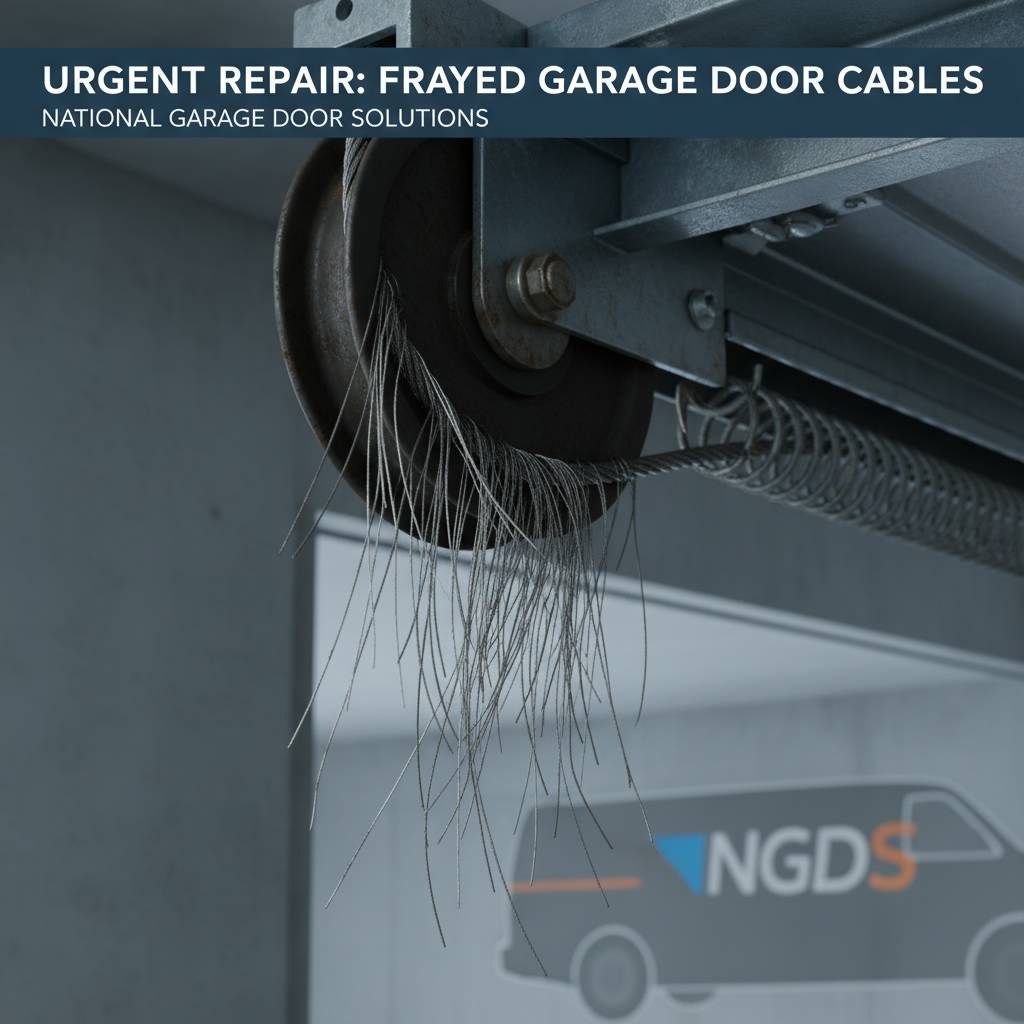 Frayed cables are not just a maintenance item; they signify an immediate failure risk. Garage doors weigh hundreds of pounds, and the cables bear significant tension. When strands break, the cable's load-bearing capacity drops dramatically. A partially broken cable may still hold under light conditions but can fail without warning during normal use, releasing the door's energy abruptly.
Professional technicians are trained to understand the full system: springs, cables, drums, guides, and the opener. Replacing a cable requires releasing and reapplying tension safely, aligning drums, and ensuring springs and pulleys are in proper condition. Improper DIY attempts can result in snapped cables, damaged components, or severe injuries. That is why frayed cables are a reliable indicator that you should call expert help rather than attempting a patch or a temporary fix.
Common risks and consequences of DIY cable repairs
Homeowners sometimes try to save money by performing their own cable repairs, which can lead to dangerous outcomes. Handling torsion springs, for example, poses a high risk: springs store enormous energy, and if released incorrectly, they can cause severe harm. Improper cable replacement can also cause the door to become unbalanced, putting extra strain on the opener and shortening its lifespan.
Beyond personal injury, poorly repaired cables can cause property damage. A door that falls or comes off its track can dent vehicles, damage garage interiors, or trap household items. Insurance claims in such scenarios may be complicated if the work was done without professional certification. A reputable technician will document the replacement and provide guarantees that protect your investment and safety.
Typical mistakes in DIY attempts
- Not using the correct cable thickness or type for the door
- Failing to properly re-tension springs after cable replacement
- Neglecting alignment of drums and pulleys, causing uneven wear
- Working without proper tools or safety equipment
- Overlooking related worn parts that should be replaced at the same time
What to expect from professional cable replacement
A qualified technician will begin with a thorough inspection, examining cables, springs, drums, pulleys, rollers, and the opener. They assess whether the fraying is localized or part of broader system wear. Replacing the cable typically involves detaching the door from the opener, securing the door in place, removing the old cable, and installing a new cable rated for your specific door weight and configuration.
After installation, the technician will re-tension springs and test the door through many cycles to ensure smooth, balanced operation. They'll also check safety features such as auto-reverse and sensor alignment and provide maintenance tips to extend the life of the new cables. You should receive a clear explanation of the work performed and any warranty or service guarantee that comes with the replacement.
Maintenance, prevention, and when to schedule inspections
 Regular maintenance reduces the likelihood of sudden cable failure. Aim for professional inspections at least once a year, and consider biannual checks if your door sees heavy use or if your climate accelerates corrosion. Keep the tracks clean, lubricate moving parts with a recommended lubricant, and listen for new noises that indicate friction or misalignment.
Even with good maintenance, cables reach the end of their service life. If you notice early signs like slight fraying, rust spots, or increased vibration, schedule service rather than waiting for a complete break. Preventive replacement is often less expensive and far safer than emergency repairs after a failure. Technicians can also recommend upgrades, such as higher-grade cables or corrosion-resistant coatings, depending on your environment.
Real-world examples and quick case studies
Consider a suburban homeowner who noticed a few strands of cable sticking out near the drum. They delayed repair for several months because the door still functioned. One morning, the cable failed while the car was inside the garage, causing the door to fall and dent the vehicle. The repair and vehicle damage cost far more than the preventative cable replacement would have. This common scenario highlights how fraying signals a growing risk that becomes urgent.
Another case involved a rental property where a tenant heard an abnormal snapping sound. The owner called professionals immediately; the technician replaced both cables and adjusted the springs, catching worn pulleys that would have failed soon. Because the owner acted at the first sign, they avoided a full door derailment and protected both occupants and property.
Frequently asked questions
Can I temporarily secure a frayed cable until a technician arrives?
It is usually safer to limit usage of the door and keep it stationary in a closed position if possible. Do not attempt to tie off or clamp a frayed cable yourself; such temporary fixes can change tension and lead to unexpected failures. If you must move the door, have a professional perform the operation so the system remains under controlled conditions.
How long do replacement cables typically last?
The lifespan of a cable depends on usage frequency, environmental conditions, and maintenance. In general, a well-maintained cable in a temperate climate can last several years, but coastal or humid environments may require more frequent attention. Regular inspections will identify wear early and help extend service life through proactive care.
Are there visual standards for when a cable must be replaced?
If you can see loose strands, kinks, flattening, rust that weakens the wires, or a loss of diameter in any section of the cable, replacement should be scheduled immediately. Technicians often follow manufacturer guidance and safety protocols to determine when a cable no longer meets safety margins.
DIY alternatives and safe interim actions
If you prefer to be hands-on, there are safe preparatory steps you can take without touching the cable itself. Keep the garage door closed to reduce cycling, disconnect the opener only if you understand how to secure the door manually, and remove vehicles or valuables from beneath the door. Document the condition with photos to share with the technician, which can speed diagnosis and parts preparation.

Remember that many repairs, especially those involving torsion springs and cable tensioning, should remain in the professional domain. Investing in professional preventive maintenance saves you the stress and risk of a last-minute emergency call and often extends the overall life of the door system.
Summary and next steps
Frayed garage door cables clearly indicate that urgent professional repair is needed. The risks-sudden failure, personal injury, and property damage-make this a non-negotiable safety issue. Recognize the signs, avoid DIY attempts that involve spring or cable tension adjustments, and seek qualified service promptly. Timely replacement and system checks restore safe function and give you peace of mind.
If you see fraying or any of the signs discussed here, contact National Garage Door Services for fast, professional service. Call 469-555-8888 now to schedule an inspection and cable replacement. Our experienced technicians can restore proper function and prevent accidents.
We're ready to help: contact National Garage Door Services at 469-555-8888 for safe, prompt garage door cable replacement and reliable ongoing maintenance.