Steps to Get Emergency Garage Door Repair
Emergencies require fast, reliable action, and National Garage Door Services provides a step-by-step plan to secure emergency garage door repair. This guide outlines the immediate steps homeowners should take to stay safe and expedite repairs. For immediate dispatch of a qualified technician, call 469-555-8888 and we'll coordinate priority service. Let National Garage Door Services help you resolve the situation quickly and professionally.
When a garage door fails - whether it's stuck halfway, off its tracks, or making dangerous noises - the next minutes matter. This page walks you through practical, prioritized steps to get emergency garage door repair quickly and safely. You'll find clear actions to protect people and property, a simple checklist to diagnose the problem, guidance on documenting damage, and what to expect from a professional visit. Use these steps to get emergency garage door repair and reduce downtime.
Immediate safety steps you should take first
Safety must come before troubleshooting. If the garage door shows unpredictable movement, has visible broken springs, or the opener is sparking, position family members and pets away from the door and do not operate the opener again. An uncontrolled door can fall suddenly or parts can fly off. Establish a safe perimeter and keep everyone a comfortable distance until you know the door is secured.
Next, cut power to the garage door opener at the circuit breaker or unplug the unit if it's safe to reach. Turning power off prevents accidental activation while you assess the situation or wait for help. If the door is partially open and appears to be slipping, support it from underneath if you have a secure means to do so - otherwise, wait for a trained technician. Document conditions with photos but avoid approaching damaged hardware.
- Step 1: Move people and pets clear of the door area.
- Step 2: Turn off power to the opener (breaker or unplug).
- Step 3: Do not attempt complex repairs, especially with springs or cables.
- Step 4: Call for professional emergency garage door repair if the door is unsafe.
Quick diagnostic checklist: what you can safely check now
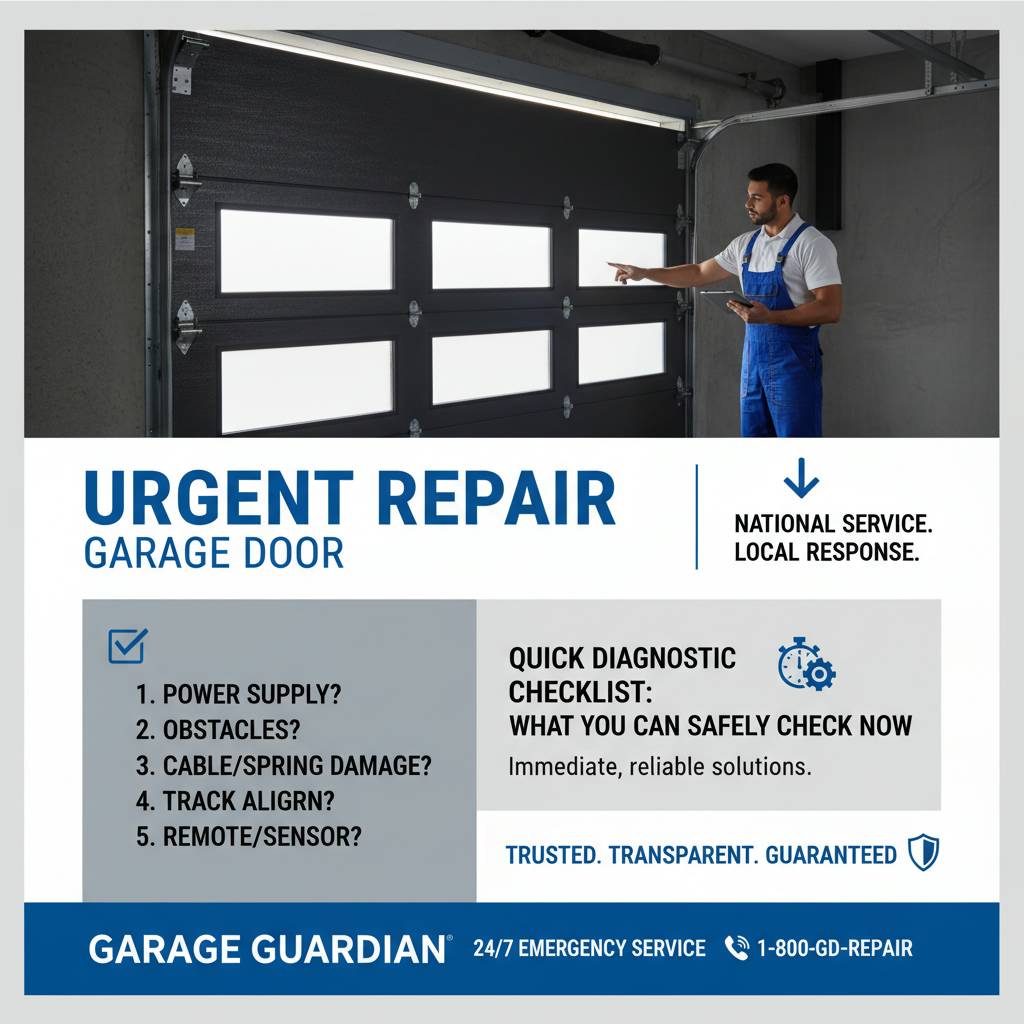 Before the technician arrives, there are a few safe observations you can make that help speed diagnosis and repair. Look for obvious signs such as broken torsion or extension springs, snapped cables, misaligned tracks, dented panels, or burned smells coming from the opener motor. These visual details let the service team prepare the right parts and tools so they can work faster once on-site.
What to look for and report
- Is the door completely closed, halfway open, or stuck in an odd position?
- Are any springs or cables visibly broken or hanging loose?
- Do the tracks look bent, separated, or obstructed?
- Is there a grinding or burning smell from the opener or motor?
- Did the problem happen suddenly during normal operation or after an impact?
Note any recent events that could be relevant - a vehicle backing into the door, a storm with wind damage, or a power surge. These context details are helpful. If you have a manual release cord and feel confident using it, you can disengage the opener to close the door manually, but only do this if the door moves smoothly by hand and there's no sign of broken hardware. If resistance is present, stop and wait for help.
How to document damage and prepare your home for the technician
Clear, concise information saves time. Take a few photos from different angles showing the entire door, any damaged sections, the opener, and the area around the tracks. A short video of the malfunctioning behavior - like a door that jerks or pauses - is extremely valuable. These images let the dispatcher and technician determine whether they'll need additional hands, replacement parts, or a specialty truck stocked with springs and cables.
Prepare for the technician's arrival by clearing the driveway and access routes, removing vehicles if possible, and unlocking gates so the technician can park close. Make a note of the make and model of your garage door opener (often printed on the motor housing) and have any warranty or recent service records available. If you have home insurance or a home warranty that might cover part of the repair, have policy details and contact numbers handy - the technician can work with you on documentation.
What professional emergency repair covers and what to expect on the call
When you request emergency garage door repair, a reputable company prioritizes safety, a fast response, and transparent communication. Expect the dispatcher to confirm the symptoms, ask if anyone is injured, and verify your address and accessibility. They will often provide an estimated time of arrival and an initial cost range for common emergency fixes. National Garage Door Services technicians arrive with tools and parts to complete most repairs on the first visit.
Common emergency services include replacing broken torsion or extension springs, re-tensioning cables, straightening or replacing bent tracks, repairing or replacing opener components, and securing doors that have come off their track. Repairs that involve springs or cables are dangerous for untrained homeowners; professionals use industry-standard tools and safety protocols to avoid injury. Expect the technician to explain the diagnosis, provide a written estimate, and get your approval before starting work.
| Issue | Typical Response Time | What Technician Will Do |
|---|---|---|
| Broken spring | Same-day or within hours (emergency) | Replace spring(s), balance door, safety test |
| Off-track door | Same-day if accessible | Re-seat tracks, replace damaged hardware, adjust alignment |
| Opener failure | Same-day or next available slot depending on parts | Diagnose motor/board, replace parts or advise replacement |
Cost factors vary: the type of spring (torsion vs. extension), the size and weight of the door, whether custom parts are needed, and accessibility. Emergency call-out fees are common because of the priority dispatch, but reputable technicians will be upfront about those charges. National Garage Door Services aims to minimize surprises and will discuss warranty coverage or parts guarantees when applicable.
Practical do's and don'ts while waiting for help
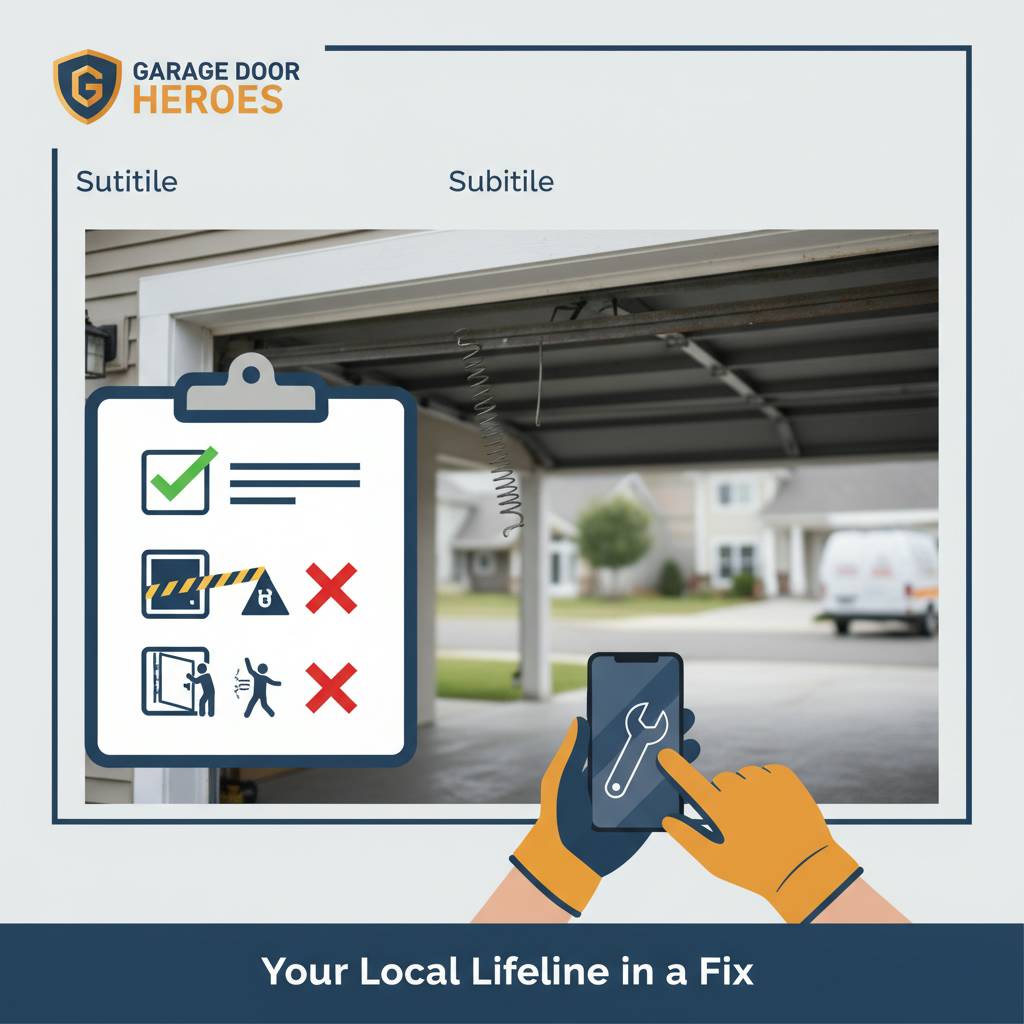 There are simple actions that protect you and keep the problem from worsening. Do keep the area cordoned off and clearly mark any hazards. Do retrieve and hand over any relevant remote controls, keypad codes, or gate access instructions to the technician. Do keep pets and small children away from the garage until the door is stabilized. These small steps speed the repair and reduce risk.
Don't try to repair or replace springs, cables, or openers yourself unless you have specific training and the correct tools. Don't stand under a door that's not fully secured and don't use makeshift supports that could fail. If the door has been hit by a vehicle and structural framing is compromised, consider securing the opening temporarily to prevent weather or intruders from entering while you arrange permanent repairs.
Preventative maintenance tips to avoid future emergencies
Many emergency calls are preventable with a little routine care. Lubricate rollers, hinges, and springs twice a year with a silicone-based or garage-door-specific lubricant. Inspect cables and rollers for signs of wear, listen for grinding or squealing noises that can indicate failing bearings, and visually check that tracks are aligned and fasteners are tight. Keeping the door balanced and the opener serviced reduces strain on parts and extends their life.
Schedule a professional inspection annually. A trained technician can identify emerging issues before they become emergencies - worn springs approaching the end of their life, slightly bent tracks that will worsen, or electrical concerns in your opener. If you live in an area with seasonal storms, consider reinforcing panels and confirming that your opener has proper surge protection to prevent weather-related failures.
Final steps, service options, and how National Garage Door Services helps
If you need emergency assistance, call now. A live dispatcher will collect the details you noted from the checklist, prioritize the request, and send a technician who can perform emergency garage door repair safely and efficiently. National Garage Door Services provides clear estimates, licensed technicians, and a commitment to leaving the job safe and fully functional. In many cases we can perform the repair on the first visit because we bring the most common replacement parts and tools.
For homeowners wanting ongoing protection, ask about a maintenance plan or annual service package when the emergency is resolved. Regular scheduled service reduces emergency call-outs and often includes priority scheduling, discounted parts, and longer warranty coverage. NGDS customers tell us this peace of mind is one of the best investments they've made to protect their home and family.
Call now for priority dispatch: 469-555-8888
If you've already documented the condition and followed the safety steps above, you're in a strong position to get fast repairs with minimal disruption. We'll coordinate arrival times, bring the correct tools and replacement parts, and explain options clearly so you can make the best choice for safety, cost, and longevity. When emergencies happen, a calm, organized approach matters - and National Garage Door Services is ready to help.
Contact National Garage Door Services at 469-555-8888 for emergency garage door repair and fast professional support. We're ready to respond and get your door secure again.